The Archipelago Paradigm: More Than Just Ten Thousand Islands
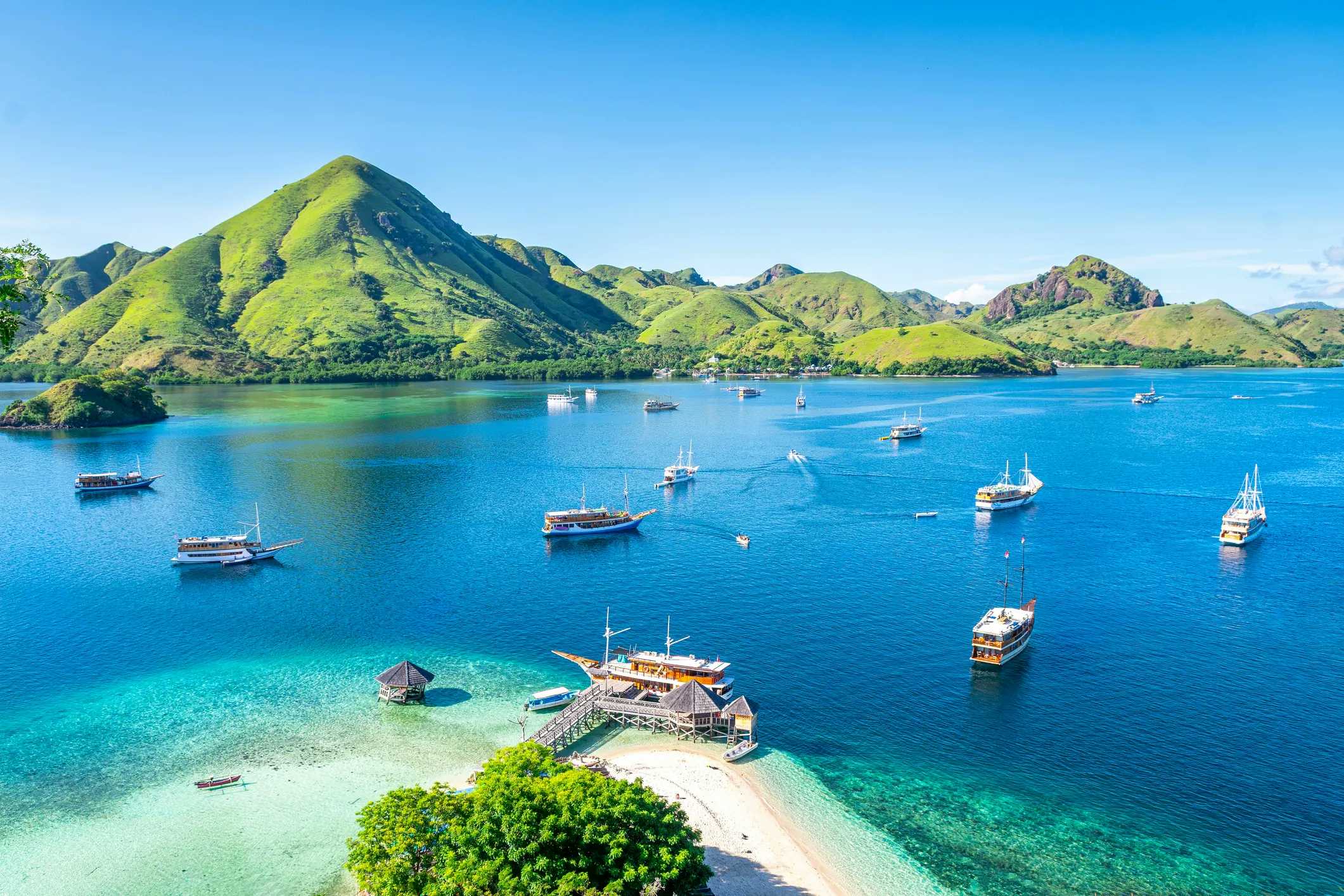
When you look at Indonesia on a map, you aren’t looking at a single country so much as a sprawling, maritime continent. Spanning three time zones and comprising over 17,000 islands, this is the world’s largest archipelagic state. To understand Indonesia in 2026, you have to move past the singular “Bali-centric” view that many travelers hold. While Bali remains the “Island of the Gods” and a global tourism powerhouse, it is just one facet of a nation that stretches further than the distance from London to Baghdad. Indonesia is a land of sheer geographical diversity, where jagged volcanic peaks meet pristine coral reefs, and ancient rainforests neighbor futuristic megacities.
Expertly speaking, the Indonesian identity is built on the national motto: Bhinneka Tunggal Ika—Unity in Diversity. This isn’t just a catchy phrase on a coat of arms; it is the sociopolitical glue that holds together more than 300 distinct ethnic groups and 700 living languages. In a world where many nations are struggling with fragmentation, Indonesia’s ability to maintain a cohesive national identity while celebrating its diverse heritage is a masterclass in modern statecraft. From the matrilineal societies of the Minangkabau in Sumatra to the tribal traditions of the Dani in Papua, the country is a living museum of human anthropology.
Casually, it’s a place that constantly keeps you on your toes. One day you’re navigating the organized chaos of Jakarta—a city that pulses with a “work hard, play hard” energy—and the next, you’re on a slow boat through the Tanjung Puting National Park in Kalimantan, watching orangutans swing through the canopy. The country is a sensory overload in the best possible way. Whether it’s the smell of clove cigarettes (kretek) in the air, the rhythmic “thwack” of a satay griller, or the ethereal call to prayer echoing across a misty valley, Indonesia is a nation that demands to be experienced with all five senses.
The Economic Giant Awakens: Nusantara and the Future of Southeast Asia
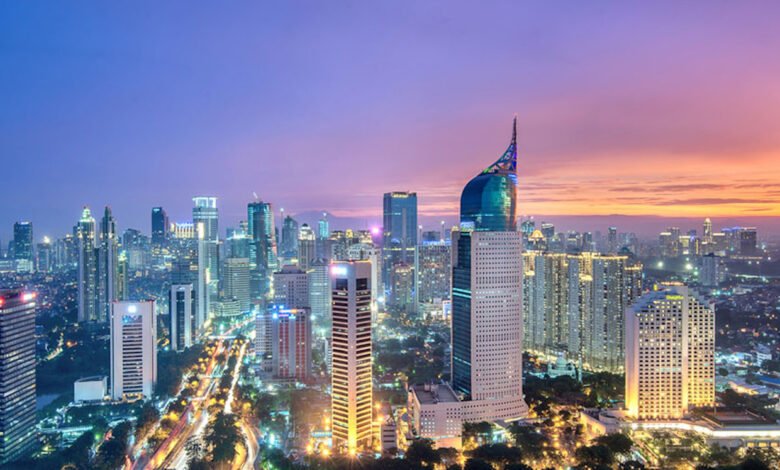
Indonesia. If you want to talk about the global economic shifts of the late 2020s, you have to talk about the “Indonesian Renaissance.” For decades, Indonesia was labeled an “emerging market,” but in 2026, the emergence is complete. The nation is now firmly established as the largest economy in Southeast Asia and a critical player in the G20. The most visible symbol of this ambition is Nusantara, the brand-new capital city being carved out of the jungle in East Kalimantan. This isn’t just a move to escape the sinking ground and congestion of Jakarta; it is a strategic “hard reset” designed to shift the nation’s economic center of gravity from Java to the rest of the archipelago.
From an expert’s perspective, the “Downstreaming Policy” (Hilirisasi) has been a stroke of genius. By banning the export of raw ores like nickel—of which Indonesia holds the world’s largest reserves—the government has forced global giants to build smelting and battery manufacturing plants on Indonesian soil. This has turned the country into a vital node in the global EV (Electric Vehicle) supply chain. In 2026, if you are driving an electric car, there is a very high probability that its “heart”—the battery—contains minerals processed in Indonesia. It’s a bold, “resource-nationalism” play that has paid off, creating millions of high-tech jobs and fueling a middle-class explosion.
Beyond minerals, Indonesia is a “Mobile-First” digital superpower. With a median age of around 30, the population is incredibly tech-savvy. We have seen the rise of “Super-Apps” like GoTo that have revolutionized everything from logistics to fintech. In 2026, Indonesia’s “Unicorn” count is among the highest in the region, with a startup ecosystem that is attracting record levels of venture capital. The country has successfully bypassed the “PC era” and jumped straight into a digital-first economy, where even the smallest street-side warung (kiosk) accepts QR-code payments. It is a high-speed digital transformation that is serving as a blueprint for the “Global South.”
The Ring of Fire: Biodiversity and the Environmental Tightrope
Indonesia’s greatest asset is also its most precarious: its natural environment. Situated on the “Pacific Ring of Fire,” the country is home to more than 130 active volcanoes. This geological volatility has created some of the most fertile soil on Earth, but it also places the nation on the front lines of natural disasters. In 2026, Indonesia has become an expert in “Disaster Resilience,” utilizing AI-driven early warning systems to protect its coastal and volcanic communities. The landscape is a reminder that in Indonesia, nature isn’t just something to look at—it is a powerful force that dictates the rhythm of life.
The country’s biodiversity is equally staggering. Indonesia is one of the world’s few “Megadiverse” nations, housing about 10% of the world’s flowering plant species and 12% of the world’s mammals. From the prehistoric Komodo dragon to the elusive Javan rhino, the archipelago is a final sanctuary for some of the planet’s most iconic wildlife. However, this biodiversity is under threat from climate change and land-use pressure. As an expert observer, it’s clear that Indonesia is walking an environmental tightrope, trying to balance its aggressive industrial growth with its commitment to zero deforestation by 2030.
The “Blue Economy” is another major focus in 2026. With some of the most diverse marine ecosystems on the planet—part of the “Coral Triangle”—Indonesia is leading international efforts in marine conservation. Projects to restore seagrass meadows and mangrove forests are being scaled up as part of the country’s “Carbon Credit” strategy. Indonesia understands that its jungles and peatlands are global “carbon sinks,” and in the late 2020s, it is leveraging this “Green Capital” to secure international climate finance. The goal is to prove that a developing nation can grow rich without destroying the very ecosystems that sustain it.
Culinary Diplomacy: The Global Rise of Indonesian Flavor
You cannot discuss Indonesia without diving into its kitchen. Indonesian cuisine is arguably the most complex and flavorful in the world, a result of centuries of spice trade and cultural exchange. In 2026, “Culinary Diplomacy” has become a key part of the country’s soft power. We are seeing a “Nasi Goreng Revolution” where Indonesian flavors—lemongrass, galangal, turmeric, and the ubiquitous sambal—are becoming as common in London or New York as they are in Bandung. The cuisine is a reflection of the archipelago’s history: a spicy, savory blend of indigenous traditions, Chinese influence, and Dutch colonial remnants.
Expertly speaking, Indonesian food is a masterclass in “Flavor Layering.” Take Rendang, for example—the slow-cooked beef dish from West Sumatra that is consistently voted the best food in the world. It’s not just a curry; it’s a process of caramelization that takes hours, resulting in a depth of flavor that is unparalleled. Or consider the world of Jamu, traditional herbal medicine. In 2026, Jamu has been “rebranded” as a global wellness trend, with turmeric and ginger-based drinks finding their way into high-end health boutiques worldwide. Indonesia is exporting its ancestral wisdom one bottle at a time.
Casually, the best way to eat in Indonesia is still the “Street Food” way. There is a specific joy in sitting on a plastic stool at a Kaki Lima (five-legged cart) and eating a bowl of Bakso (meatball soup) while the tropical rain hammers down on the tarp above you. The food is communal, unpretentious, and incredibly diverse. Every island has its own specialty: the spicy Ayam Betutu of Bali, the sweet Gudeg of Yogyakarta, or the fresh, citrusy Papeda of Papua. To eat your way across Indonesia is to understand the soul of the people—it is a culture that expresses love, hospitality, and history through the medium of the plate.
The 2026 Outlook: A Nation of Infinite Potential
As we look toward the end of the decade, Indonesia stands at a historic crossroads. It is a nation that has successfully transitioned from a post-colonial struggle to a stable, vibrant democracy. The challenges ahead are significant—improving education quality, reducing wealth inequality, and managing the climate transition—but the momentum is undeniable. Indonesia is no longer just a “destination”; it is a “determinant” of global affairs. Whether in the halls of the ASEAN headquarters or in the nickel mines of Sulawesi, the decisions made in this archipelago now ripple across the planet.
The “Expert” consensus is that Indonesia will be one of the top five economies in the world by 2045, the centenary of its independence. This “Golden Indonesia” (Indonesia Emas) vision is the North Star for the country’s youth, who are more connected, educated, and ambitious than any generation before them. We are seeing a surge in local pride, where young Indonesians are taking traditional crafts like Batik and Tenun and reimagining them for the global fashion stage. It is a country that is finally comfortable in its own skin, blending its ancient roots with a high-tech future.
Ultimately, Indonesia is a reminder that the world is much larger and more diverse than our bubbles often suggest. It is a place that defies easy categorization—a Muslim-majority nation with a deep Hindu-Buddhist past, a democratic republic that respects traditional sultanates, and a digital pioneer that still honors the rhythms of the seasons. As a “Casual Expert,” my advice is simple: don’t just visit Indonesia; try to listen to it. In the “thousand-island” dialogue of this great nation, you might just find the future of the world. Let’s go.