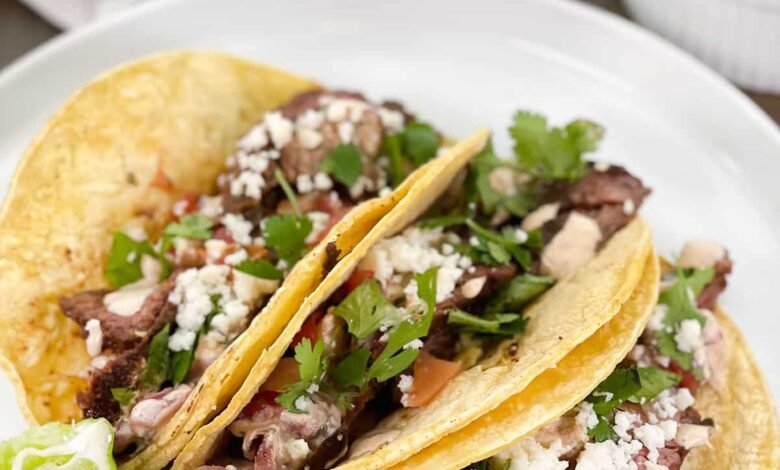
There is something undeniably magical about the smell of thinly sliced beef hitting a screaming-hot grill. If you have ever stood near a street food cart or a backyard family gathering where carne asada tacos are being made, you know exactly what I am talking about. It is an sensory experience that immediately makes your mouth water—the hiss of the fat rendering, the puff of smoke carrying hints of citrus and garlic, and the visual of beautifully charred meat stacked high on a chopping block. It is not just dinner; it is a celebration of simple ingredients executed with absolute precision.
While it is easy enough to head down to your local taqueria to get your fix, mastering this classic dish at home elevates your culinary game to a whole new level. Contrary to what some complicated online recipes might tell you, making world-class carne asada tacos does not require professional kitchen equipment or secret, hard-to-find ingredients. It requires an understanding of how acid interacts with meat fibers, how high heat develops deep flavor profiles, and why the humble corn tortilla deserves just as much respect as the steak itself.
In this definitive guide, we are going to break down every single element that separates a mediocre, chewy taco from an elite, flavor-packed masterpiece. We will look at the best cuts of beef to buy without breaking the bank, how to craft a balanced marinade that guarantees tenderness, and the exact cooking techniques used by seasoned grill masters. Grab an apron and a cold drink, because we are diving deep into the art and soul of real-world carne asada.
Understanding the Cut: Choosing the Right Beef
When it comes to carne asada, which literally translates to “grilled meat,” your choice of beef sets the foundation for everything else. Many beginners fall into the trap of buying expensive, thick steaks like ribeye or New York strip, thinking that price equals taco perfection. In reality, traditional Mexican grilling relies on thinner, hard-working cuts that possess a robust beefy flavor capable of standing up to bold marinades and intense flame. The goal is to find a cut that cooks incredibly fast while maintaining a juicy, tender interior.
The undisputed champion of the taco world is skirt steak (arrachera). Skirt steak comes from the plate section of the cow, and it features a highly pronounced, loose grain structure that absorbs marinades like a sponge. It has a high fat content distributed throughout the meat, meaning that when it hits a hot grill, that fat renders beautifully, keeping the steak moist and imparting a deeply rich flavor. If you want that classic, authentic street taco texture that gives a satisfying bite without being tough, skirt steak should always be your first choice.
Your next best option is flank steak, which is leaner and slightly thicker than skirt steak. Because it has a tighter grain, it requires a bit more care during the marinating and slicing process to ensure it stays tender, but it offers a wonderfully clean, beefy punch. Another highly underrated and traditional option is flap meat (bistec de palomilla or sirloin flap). Flap meat is incredibly budget-friendly, possesses a loose texture similar to skirt steak, and cooks in a matter of minutes, making it a favorite among high-volume taquerias.
The Chemistry of Flavor: Crafting the Perfect Marinade

There is a fierce debate in the grilling community about whether authentic Carne Asada Tacos a marinade or just a heavy dusting of coarse salt. While purists coaching a high-end cut over wood coals might opt for salt alone, a well-crafted liquid marinade is the secret weapon for home cooks looking to unlock maximum tenderness and flavor. A great marinade does not just sit on top of the meat; it works on a molecular level to break down tough connective tissues while infusing every single fiber with savory, acidic notes.
To build an expert-level marinade, you need to balance four essential pillars: acid, fat, salt, and aromatics. For the acid component, skip the white vinegar and reach for fresh citrus. A combination of fresh lime juice and orange juice provides the ultimate tropical brightness; the citric acid chemically tenderizes the beef, while the natural sugars in the orange juice aid in creating a beautifully dark, caramelized crust on the grill. Pair this with a neutral oil, like canola or avocado oil, which helps distribute the fat-soluble flavors and prevents the thin meat from sticking to the grates.
Next come the aromatics, where you can really let your personality shine. A generous amount of smashed garlic cloves, finely chopped cilantro (stems included, as they hold the most flavor), ground cumin, and a dash of dried Mexican oregano form the traditional backbone. If you appreciate a subtle background heat, blending in a minced jalapeño or a couple of canned chipotle peppers in adobo sauce adds an incredible layer of complexity. Let your beef bath in this mixture for a minimum of two hours, but try not to exceed twenty-four hours, or the heavy acid profile will turn the exterior of your steak mushy.
Fire and Smoke: Grilling Techniques for Maximum Char
Cooking carne asada is a fast, high-stakes game where low-and-slow cooking has absolutely no place. Because the cuts of meat we use are thin, leaving them on the grill for too long will dry them out completely, turning your beautiful steak into something resembling shoe leather. The objective here is simple: you want your cooking surface to be as hot as humanly possible so you can develop a deep, smoky char on the outside while keeping the center a juicy medium-rare to medium.
If you are using a charcoal grill—which is highly recommended for that authentic backyard flavor—pile your lit coals high on one side of the grill to create a direct cooking zone. Drop the grate back in place and let it heat up until you can only hold your hand over it for a single second. For gas grillers, crank every single burner to its maximum setting and leave the lid closed for at least fifteen minutes before cooking. When you lay the marinated steak down, you should hear a violent, immediate sizzle that signals the searing process has begun.
Leave the steak entirely alone for about three to four minutes to allow a dark, flavorful crust to develop, then flip it over to finish the other side for another two to three minutes. You are aiming for an internal temperature of around 130°F to 135°F for medium-rare. Once the steak comes off the fire, resist the urge to cut into it immediately. Transfer it to a cutting board, tent it loosely with aluminum foil, and let it rest for five to ten minutes; this brief pause allows the boiling cellular juices to redistribute calmly throughout the meat instead of spilling out onto your board.
The Art of the Slice: Muscle Fibers Matter
You could pick the perfect cut, marinate it flawlessly, and grill it like a seasoned professional, but if you fail at the cutting board, your tacos will still end up tough and difficult to chew. Slicing carne asada is where science meets presentation. All steak cuts possess a “grain,” which refers to the direction that the long, fibrous muscle bundles run across the meat. If you slice parallel to these fibers, your teeth have to do the hard work of tearing those long strings apart, resulting in a rubbery texture.
To achieve that effortlessly tender texture, you must always slice against the grain. Look closely at your rested steak to identify which way the parallel lines are running, then orient your knife perpendicular to those lines. For long cuts like skirt steak, it helps to first section the meat into manageable three-to-four-inch blocks, then rotate those blocks ninety degrees before slicing. Cut the steak into incredibly thin strips, keeping your knife at a slight angle to create wider, tender ribbons of beef.
Once you have your thin strips, gather them together and dice them crosswise into small, bite-sized cubes. Street tacos are meant to be eaten on the move, and dicing the meat ensures that every single bite yields a perfectly proportioned mix of charred exterior and juicy interior without pulling the entire piece of steak out of the tortilla on your first bite. Keep the chopped meat pooled in its own resting juices on the board until you are ready to construct your tacos.
Tortillas and Toppings: Keeping It Classic
An exceptional taco is a exercise in balance, where the toppings are designed to contrast and elevate the rich, fatty nature of the grilled beef rather than overpower it. In traditional Mexican street food culture, heavy-handed additions like shredded cheddar cheese, sour cream, and store-bought iceberg lettuce are left entirely off the menu. Instead, the focus shifts to a minimalist trio of fresh ingredients that provide texture, brightness, and a sharp counter-punch to the savory meat.
First, let us talk about the vehicle: the tortilla. Always opt for high-quality corn tortillas, and never serve them raw or cold straight out of the plastic bag. To properly activate a corn tortilla, heat a dry cast-iron skillet or griddle over medium-high heat and warm each tortilla for about thirty seconds per side until they become pliable, slightly puffed, and dotted with faint brown spots. Taquerias famously double-up on the tortillas for each taco, using two layers to prevent the moisture from the meat and salsas from tearing the base apart.
For the ultimate street-style presentation, top your piled-high carne asada with nothing more than finely diced white onion and fresh, chopped cilantro leaves. The sharp, clean crunch of the raw onion cuts straight through the richness of the beef fat, while the herbs provide a refreshing, aromatic finish. Serve them alongside plenty of fresh lime wedges so guests can squeeze bright, acidic juice over their tacos right before eating, and offer a choice of a vibrant salsa verde (made with roasted tomatillos and jalapeños) or a smoky salsa roja to tie the entire experience together.