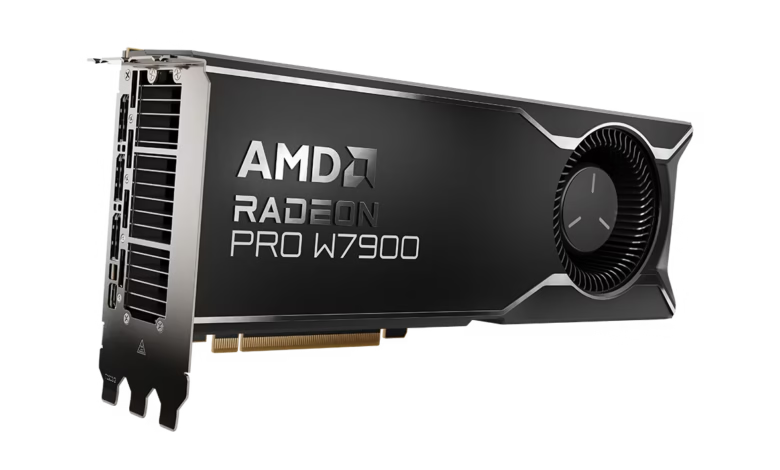
The Underdog’s Ascent: Understanding the AMD GPU Legacy
If you’ve spent any time in the PC building community over the last decade, you know that the “Team Red” versus “Team Blue” (and “Team Green”) rivalry is more than just a marketing gimmick—it’s a battle of philosophies. At the heart of this conflict sits the AMD GPU. For years, Advanced Micro Devices (AMD) was viewed as the “value” alternative to NVIDIA’s high-priced dominance. However, as we move through 2026, that narrative has shifted significantly. AMD isn’t just the budget king anymore; they are a legitimate architectural powerhouse that has forced the entire industry to rethink how we process pixels.
The journey of the AMD GPU is a masterclass in resilience and engineering pivot. After acquiring ATI in 2006, AMD spent years refining what would eventually become the Graphics Core Next (GCN) architecture. While GCN was a workhorse, it eventually hit a thermal and efficiency wall. This led to the birth of RDNA (Radeon DNA), a ground-up redesign specifically built for gaming. By moving away from the “one-size-fits-all” approach of GCN, AMD managed to drastically improve “performance per watt,” bringing them neck-and-neck with the competition in pure rasterization.
Expertly speaking, the modern AMD GPU is defined by its “Chiplet” design—a revolutionary approach first seen in the RX 7000 series. By breaking the GPU into smaller functional units rather than one massive monolithic chip, AMD has bypassed the manufacturing limitations that plague high-end silicon. This allows them to maximize yields and keep costs lower for the consumer while still pushing the boundaries of what a single card can do. It’s a strategy borrowed from their highly successful Ryzen CPUs, and it has fundamentally changed the economics of high-end graphics.
RDNA 4 and the Modern Performance Standard
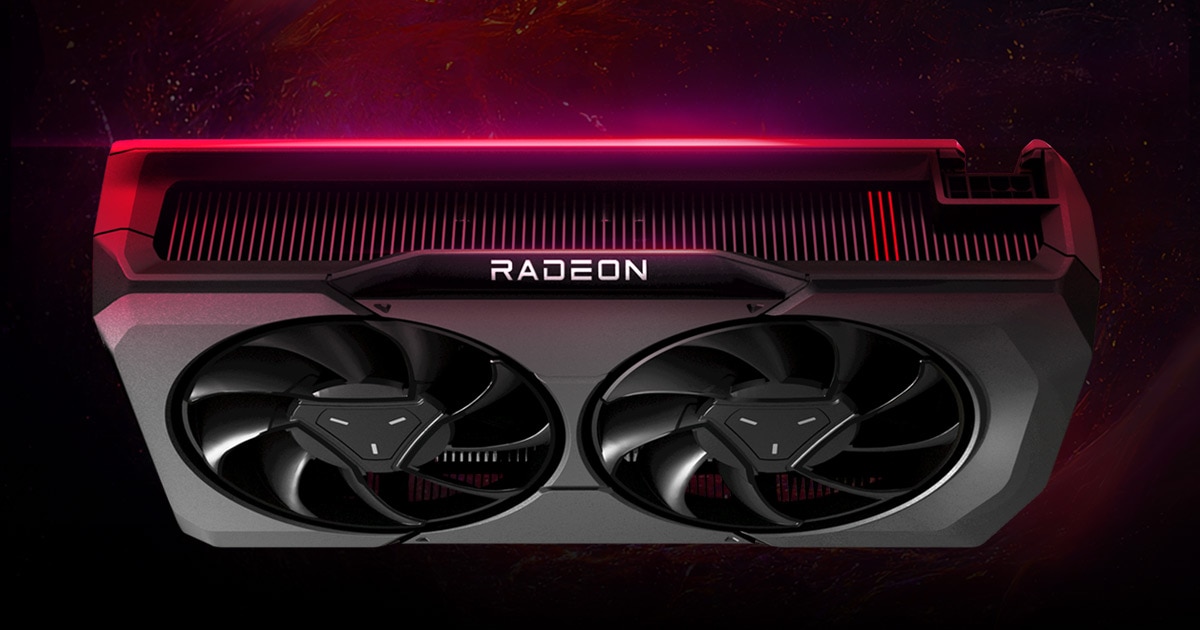
AMD gpu. As of 2026, the tech world is buzzing with the full integration of the RDNA 4 architecture. While previous generations focused heavily on catching up in raw power, RDNA 4 is where AMD has finally closed the gap in specialized features like ray tracing and AI-driven upscaling. The current lineup of AMD GPUs utilizes a refined 4nm process, allowing for clock speeds that were unthinkable just a few years ago. But more importantly, AMD has leaned into their “Open Source” philosophy, ensuring that their tech works across a wider range of hardware than their competitors.
One of the standout features of the modern AMD GPU is FidelityFX Super Resolution (FSR). Unlike proprietary solutions that require specific hardware blocks, FSR has become a gift to the entire gaming industry. It uses sophisticated spatial and temporal upscaling to allow a mid-range GPU to perform like a flagship. In 2026, FSR 4.0 has integrated deep-learning components that make it virtually indistinguishable from native resolution, proving that AMD can compete at the highest level of software engineering without locking users into a closed ecosystem.
Furthermore, the VRAM (Video RAM) advantage has become a major talking point for AMD. While other manufacturers have been stingy with memory capacity, AMD has consistently outfitted their cards with generous helpings of high-speed GDDR7. In an era where modern games and AI workloads are increasingly memory-hungry, having 16GB or 20GB of VRAM on a mid-to-high-tier card isn’t just a luxury; it’s a necessity for future-proofing. This “consumer-first” approach to hardware specs has earned AMD a loyal following among creators and hardcore gamers who don’t want to upgrade their cards every eighteen months.
The Creator’s Edge: AMD GPUs in the Professional Workspace
For a long time, the professional world was a stronghold for NVIDIA’s CUDA cores, but the AMD GPU has made massive inroads into the creative workspace. Thanks to the “ROCm” (Radeon Open Compute) initiative, AMD has finally provided a viable alternative for developers, data scientists, and 3D artists. Whether you are rendering a complex scene in Blender or training a local LLM (Large Language Model), the compute power of a modern Radeon card is formidable. The massive raw TFLOPS (Teraflops) output of cards like the RX 7900 XTX and its 2026 successors has made them a favorite for high-bitrate video editing and complex simulations.
One of the most overlooked aspects of the AMD GPU is the media engine. AMD’s hardware AV1 encoding is world-class, allowing streamers and content creators to push high-quality 4K video at much lower bitrates. This is a game-changer for the “creator economy” of 2026, where high-fidelity video is the standard. By integrating dedicated AI accelerators directly into the GPU die, AMD has also enabled real-time noise suppression, background removal, and auto-framing—features that used to require a dedicated studio setup but now run seamlessly on a single card.
Expertly speaking, the “Adrenalin” software suite has also undergone a total transformation. No longer just a driver installer, Adrenalin is now a comprehensive command center for performance tuning, screen recording, and system telemetry. The “One-Click Overclocking” and “Radeon Anti-Lag” features allow even novice users to squeeze every ounce of performance out of their hardware. It is this combination of raw hardware “muscle” and a refined, user-friendly software experience that has turned the AMD GPU into a legitimate threat to the professional status quo.
The Linux and Open Source Connection
If you are a Linux enthusiast, the AMD GPU is likely your only choice, and for good reason. AMD’s commitment to open-source drivers has made them the darling of the Linux community. Because the Radeon drivers are baked directly into the Linux kernel, the “plug-and-play” experience is flawless. There are no proprietary blobs to wrestle with and no “black screen” issues after a system update. This transparency has allowed the community to optimize the drivers to a degree that is simply impossible for closed-source competitors.
This open-source DNA is also what powered the handheld gaming revolution. The Steam Deck, the ASUS ROG Ally, and their 2026 successors are all powered by AMD “APUs”—chips that combine a Ryzen CPU with a powerful Radeon GPU. This has created a unified ecosystem where developers can optimize their games for a single architecture that spans from a $400 handheld to a $4,000 gaming rig. The efficiency of the RDNA architecture is the only reason we can now play AAA titles at 60 FPS while sitting on an airplane.
Looking forward, the synergy between AMD’s CPU and GPU divisions is their ultimate “ace in the hole.” Features like Smart Access Memory (SAM) allow the CPU to access the GPU’s entire VRAM buffer at once, eliminating bottlenecks and providing a “free” performance boost of up to 15% in some titles. As we head into the late 2020s, this “platform-level” optimization is where AMD is poised to win. They are the only company that controls both the “brain” and the “eyes” of the computer, and the AMD GPU is the lens through which we will see the next decade of digital evolution.
Future-Proofing and the 2026 Landscape
As we wrap up our deep dive, we have to talk about the longevity of the AMD GPU. In a market where “planned obsolescence” is a common fear, AMD has built a reputation for “Fine Wine”—a community term for the way Radeon cards actually tend to get faster over time as drivers are optimized. A card you buy today in 2026 will likely perform better in 2028 than it does right now. This is due to AMD’s architectural foresight; they build cards with enough “headroom” in terms of memory and compute units to handle the unoptimized games of the future.
The 2026 landscape is also defined by a shift toward “Sustainability and Efficiency.” AMD has led the charge with their “AI-Power Management” features, which dynamically adjust the GPU’s power draw based on the workload. If you’re just browsing the web or watching a movie, your high-end AMD GPU will sip power like a lightbulb. But the moment you fire up a demanding title, the chiplets spring to life, delivering massive performance with surgical precision. It’s a smarter way to build hardware, acknowledging that a GPU shouldn’t just be powerful—it should be intelligent.
Ultimately, choosing an AMD GPU in 2026 is a statement of intent. It’s a choice for open standards, generous hardware specifications, and a platform that grows with you. Whether you are a hardcore gamer looking for the highest frame rates, a Linux developer seeking a stable environment, or a creator needing massive VRAM for your next masterpiece, the Radeon lineup has evolved into something truly special. The underdog days are over; the era of the AMD GPU as a market leader is officially here, and the view from the top is in glorious, high-refresh-rate 4K.